Stinging insect and nest removal in Boston requires specialized protocols due to the dense architectural landscape of Suffolk County. In neighborhoods like Back Bay, Beacon Hill, and the South End, paper wasps and…
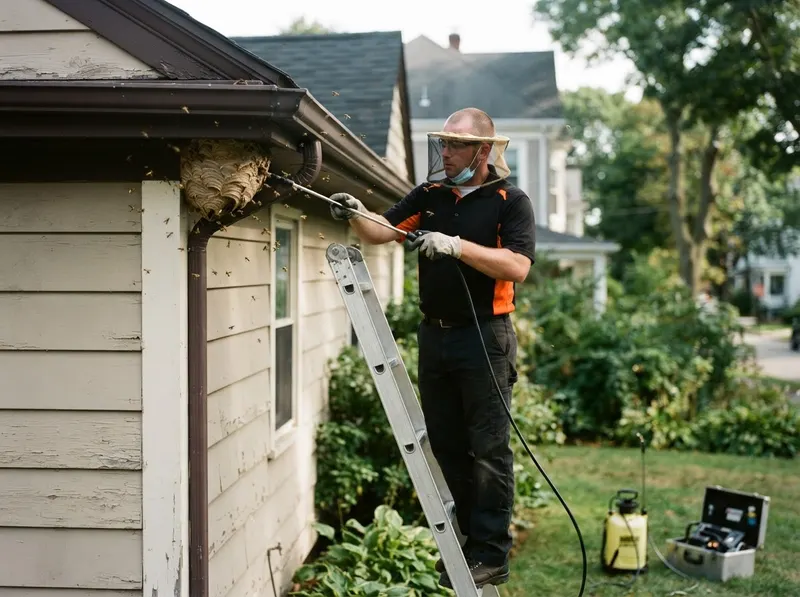
Stinging insect and nest removal in Boston requires specialized protocols due to the dense architectural landscape of Suffolk County. In neighborhoods like Back Bay, Beacon Hill, and the South End, paper wasps and European hornets exploit deteriorating lime-mortar voids, open weep holes, and uncaulked gaps around ornamental brownstone bay windows. Bald-faced hornets routinely construct basketball-sized paper nests 15 to 30 feet high in mature street trees along Commonwealth Avenue or under deep wooden cornices. When colonies establish inside historic timber framing or behind clapboard siding in Charlestown, East Boston, and Dorchester, standard store-bought aerosol sprays merely deflect foraging workers into interior living spaces. Nuvexa Bug Control utilizes directional microneedle dust injectors that introduce non-residual pyrethroid desiccant dusts straight into the primary hive core without soaking interior lath or plaster.
Decision-fit depends on nest location and colony maturity. An active exterior open-comb paper wasp cluster on a second-story deck railing in South Boston or Brighton requires a single knockdown and physical scrap-down. Conversely, late-summer yellowjacket colonies nesting inside wall cavities or stone foundations near the Arnold Arboretum in Jamaica Plain require micro-cavity thermal tracking followed by insecticidal void misting. Attempting to seal exterior exit holes before the queen and worker broods are confirmed dead forces aggressive wasps through interior electrical faceplates and light fixtures into dining rooms and bedrooms. Standard treatments carry a trade-off: exposed nests permit immediate physical detachment and disposal on visit one, whereas deep interior masonry nests require leaving the exterior entrance open for 24 to 48 hours while slow-acting transfer agents circulate throughout the subterranean or internal population.
Technicians adhere strictly to pet and human safety standards. Formulations used for indoor wall-cavity injections are non-volatile and dry within 30 minutes, preventing vapor migration into common ventilation risers or condo hallways. Following successful neutralizations, technicians seal structural access points using 1/4-inch galvanized wire hardware mesh, copper mesh, and elastomeric silicone caulking to stop future reproductive queens from overwintering inside structural joist pockets during late October freezes.
Every job gets a firm, written price after a free on-site visit.
Tell us about your stinging insect and nest removal job in Boston and we'll send a clear, written quote, usually the same day.
 Nuvexa Bug Control