Nuvexa Bug ControlNuvexa Bug Control

Residential Rodent Exclusion Boston

Residential rodent exclusion differs fundamentally from temporary baiting or broadcast rodenticides. Chemical applications reduce surface rodent counts temporarily inside living areas, but unsealed building perimeters…
Get My Free Estimate →(857) 737-8390
Residential Rodent Exclusion in Boston, MA
Quick answer
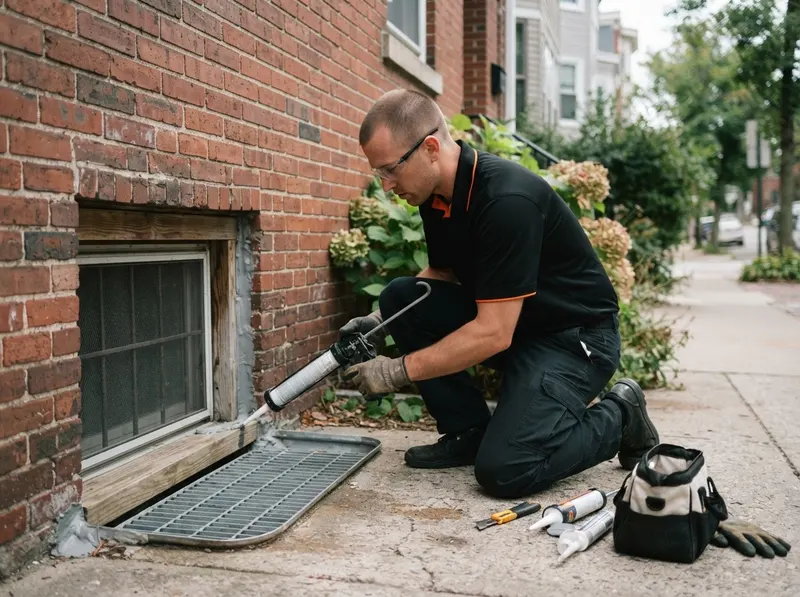
  • Scope includes physical sealing of exterior entry points down to 1/4 inch using steel wire mesh, galvanized hardware cloth, and architectural-grade elastomeric mortars.
  • Initial structural evaluation and perimeter proofing appointments require between 90 minutes and 4 hours depending on the home layout.
  • Service starts at a $200 baseline inspection and minor seal fee, with multi-unit or historic rubble foundation jobs priced between $450 and $1,800 based on total linear footage.
  • Materials used involve non-chemical physical barriers: stainless steel escutcheon plates, brass mesh, copper fill fabric, and heavy-gauge galvanized flashing.
  • Scheduling is available Monday through Saturday by phone at (857) 737-8390.

Residential rodent exclusion differs fundamentally from temporary baiting or broadcast rodenticides. Chemical applications reduce surface rodent counts temporarily inside living areas, but unsealed building perimeters allow exterior colonies from street alleys and municipal sewers to recolonize within weeks. Physical exclusion directly secures vulnerable structural junctions: fieldstone foundation mortar joints, degraded brick headers along sidewalk grades, and gaps around gas, water, or plumbing conduits. A field-tested barrier provides long-term sanitary protection, eliminating the risk of rodent carcasses decomposing behind historic lath-and-plaster walls or inside floor cavities.

In Suffolk County, regional architecture presents unique entry routes that standard spray services fail to address. Century-old rowhouses across the South End, Beacon Hill, and Back Bay frequently feature sub-sidewalk coal vaults, compromised granite curbing, and open exterior utility runs where cast-iron plumbing joins municipal infrastructure. Multi-family triple-deckers throughout Dorchester, Jamaica Plain, and East Boston often have settling balloon framing, daylight openings along sill plates, and loose bulkhead doors that allow brown rats (Rattus norvegicus) access directly to kitchen pantries. In coastal areas like Charlestown and South Boston, moisture degradation around granite foundations expands minor brick joints into 1/2-inch gaps, which mice navigate with minimal resistance.

Technicians follow an objective structural workflow to restore the protective boundary of the property. First, the exterior perimeter undergoes a 360-degree inspection from foundation soil up to 36 inches along the siding line. Second, technician teams mechanically clean and clear voids of nesting detritus, grease marks, and loose mortar. Third, technicians install 1/4-inch galvanized hardware cloth backed by non-shrink hydraulic cement or metal-reinforced sealant across every opening. Finally, interior utility raceways behind laundry appliances, radiator supply risers, and basement sills receive secondary physical barriers to isolate interior rooms entirely from unfinished foundation spaces.

Residential Rodent Exclusion cost in Boston

Baseline Inspection & Minor Entry Seal (up to 2 linear openings)$200 - $350
Single-Family Home Complete Foundation Perimeter Seal$450 - $950
Historic Brownstone Rubble Foundation & Utility Penetration Exclusion$650 - $1,400
Multi-Family Triple-Decker Full Structural Proofing$900 - $1,800

Every job gets a firm, written price after a free on-site visit.

Common questions

What is the starting price for residential rodent exclusion in Boston?
Residential rodent exclusion in Boston starts at $200 for an initial physical assessment and sealing of primary entry points, with final costs determined on-site by structural size and the number of perimeter gaps.
Why is structural exclusion preferred over chemical poisons in Boston homes?
Structural exclusion physically stops rodents from breaching foundation walls, which prevents secondary pet toxicity from chemical baits and prevents rodents from dying and decaying inside inaccessible structural cavities.
How does exclusion address historic rubble foundations in Boston brownstones?
Historic rubble foundations are sealed using non-shrink hydraulic cement, copper mesh, and heavy-gauge hardware cloth that adhere directly to irregular granite, preventing rats from burrowing through degraded lime mortar.
How long does a full residential rodent exclusion visit take in Boston?
A residential exclusion appointment in Boston typically takes between 2 and 5 hours, depending on property square footage, foundation accessibility, and the linear footage of exterior voids requiring mechanical closure.
What preparation is required before an exclusion crew arrives in Boston?
Homeowners must clear a 2-foot perimeter along basement interior walls, mechanical rooms, and exterior foundation lines so technicians can access and seal all pipe penetrations and structural joints.
Helpful resources

Trusted references & local links

USA.gov, government & consumer helpBetter Business BureauFTC Consumer AdviceU.S. Small Business AdministrationReady.govU.S. EPAENERGY STARU.S. Dept. of EnergyConsumer.govU.S. Census BureauGoogle Maps, Boston, MA

Get started today

Tell us about your residential rodent exclusion job in Boston and we'll send a clear, written quote, usually the same day.

Get your free PEST CONTROL SEVICE quote, Boston

We only use your ZIP to check availability, no spam.